

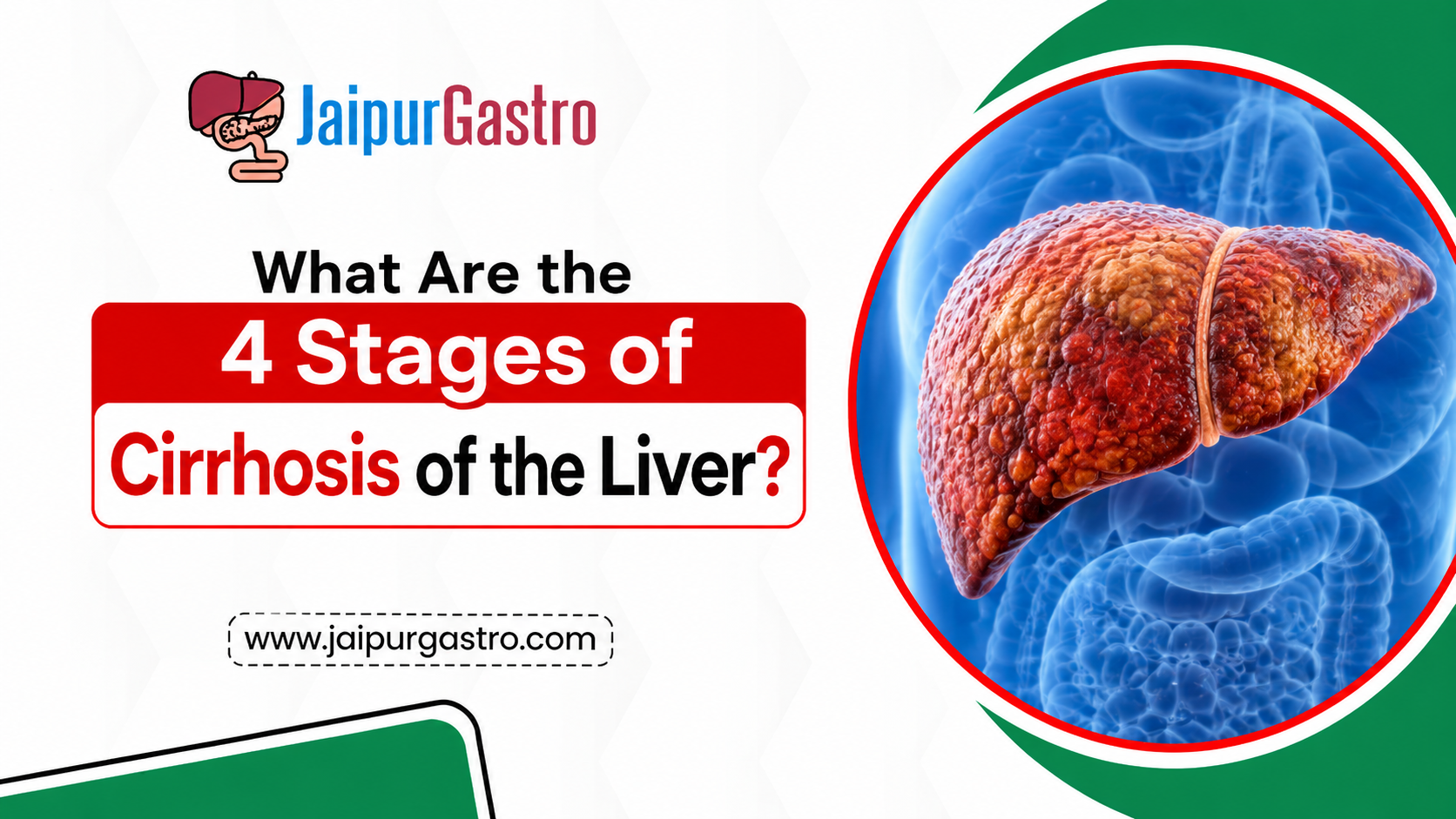
Liver cirrhosis is a long-term condition in which healthy liver tissue is slowly replaced by scar tissue. Because the liver is very good at compensating for damage, many people live with cirrhosis for years without knowing it. Understanding the 4 stages of cirrhosis of the liver helps you recognise the problem early, act on time and protect the liver from further harm.
In this guide, our team at JaipurGastro explains the stages of liver cirrhosis in simple language: what happens in each stage, which symptoms to watch for, and what you can do at every step. If you are new to this condition, you may first want to read our basic guide on liver cirrhosis meaning in Hindi.
How Cirrhosis Is Staged
Doctors usually divide cirrhosis into two broad phases: compensated (the liver still copes with its work) and decompensated (the liver can no longer cope and complications appear). Within these two phases, the four stages of liver cirrhosis are defined by the presence or absence of complications such as varices (swollen veins), ascites (fluid in the abdomen), jaundice and bleeding.
Doctors also use blood tests, ultrasound, elastography (FibroScan) and scoring systems such as Child-Pugh and MELD to judge how severe the disease is. In some cases a liver biopsy procedure may be advised to confirm the extent of scarring.
Cirrhosis usually develops from long-standing liver injury. To understand what damages the liver in the first place, read about the causes of liver cirrhosis and what causes liver cirrhosis, including alcohol, hepatitis B and C, and fatty liver disease.
The 4 Stages of Cirrhosis of the Liver
Stage 1: Early Stage Liver Cirrhosis (Compensated, No Varices)
Stage 1 liver cirrhosis is the early stage liver cirrhosis. Scar tissue has formed, but the healthy part of the liver is still doing most of the work. There are no major complications at this point.
- What happens: The liver is scarred but still functional. There are no varices and no ascites.
- Symptoms: Most people feel completely normal. A few may notice mild tiredness, loss of appetite or discomfort in the upper right abdomen. Because of this, stage 1 is often found by chance during a blood test or ultrasound.
- Outlook: The outlook is good if the cause is treated. Stopping alcohol, treating hepatitis B or C, and controlling weight and diabetes can slow or even halt further damage.
If you notice the first warning signs, our article on the early signs and symptoms of liver cirrhosis will help you recognise them.
Stage 2: Compensated Cirrhosis With Varices
In stage 2 liver cirrhosis, scarring has increased and the pressure in the liver’s blood vessels (portal hypertension) starts to rise. This leads to varices, which are swollen veins in the food pipe or stomach.
- What happens: Varices develop, but they have not bled yet. There is still no ascites.
- Symptoms: Many people still have few or no symptoms. Some may feel more fatigue, weakness, itching or spider-like blood vessels on the skin.
- What doctors do: An endoscopy is done to check the varices. Medicines such as beta-blockers, or a procedure called band ligation, may be used to reduce the risk of bleeding.
The liver is still compensating at this stage, so timely treatment can prevent the disease from moving to the next one.
Stage 3: Decompensated Cirrhosis (Ascites and Other Complications)
Stage 3 liver cirrhosis is a turning point. The liver can no longer keep up, and clear complications begin to appear. This is when liver cirrhosis symptoms become obvious.
- Ascites: Fluid collects in the abdomen, causing swelling, heaviness and breathlessness. You can learn more in our guide on ascites treatment in Jaipur.
- Jaundice: The skin and eyes turn yellow, and urine becomes dark.
- Swelling in the legs: Fluid also builds up in the feet and ankles.
- Easy bruising: The liver makes fewer clotting proteins, so bruising and bleeding become common.
- Confusion or poor concentration: This is an early form of hepatic encephalopathy.
- Muscle loss and weight loss: The body struggles to absorb and use nutrients.
Stage 3 is considered decompensated cirrhosis. It needs close medical supervision, regular follow-up, a salt-restricted diet and treatment of complications. Doctors may also begin to discuss the option of a liver transplant.
Stage 4: End-Stage Cirrhosis (Liver Failure)
Stage 4 is the final and most serious of the four stages of liver cirrhosis. Here the liver is severely damaged and multiple complications occur together or keep returning.
Common signs of liver failure at this stage include:
- Vomiting blood or passing black, tarry stools from bleeding varices
- Severe, repeated confusion, extreme drowsiness or even coma
- Ascites that does not respond to usual treatment
- Deep jaundice
- Kidney problems (hepatorenal syndrome)
- Repeated infections, including infection of the abdominal fluid
- Severe weakness and muscle wasting
Some people with end-stage disease can also develop liver cancer, so regular screening matters. You can read about liver cancer treatment in Jaipur if you want to know more. When the liver fails suddenly or severely, urgent care such as acute liver failure treatment may be needed.
A liver transplant is the only definitive treatment for end-stage cirrhosis. Doctors also use supportive care to control symptoms and improve comfort. For families who want to understand the final phase of the illness, our article on the signs of death from liver cirrhosis explains what to expect.
Quick Comparison: Stages of Liver Cirrhosis
| Stage | Phase | Key Features | Typical Symptoms |
| Stage 1 | Compensated | Scarring, no varices, no ascites | Usually none or mild fatigue |
| Stage 2 | Compensated | Varices present, no bleeding or ascites | Few symptoms, weakness, itching |
| Stage 3 | Decompensated | Ascites, jaundice, possible bleeding | Swollen abdomen, yellow eyes, confusion |
| Stage 4 | End-stage | Multiple or repeated complications | Bleeding, coma, kidney failure |
Can the Stages Be Slowed Down?
Cirrhosis scarring is generally not reversible, but its progress can often be slowed, and in the early stages the disease may stay stable for many years. For a detailed answer, see our guide: Is liver cirrhosis curable?
The most useful steps are:
- Treat the root cause. This may mean antiviral medicines for hepatitis, complete avoidance of alcohol, or weight and sugar control for fatty liver.
- Follow a liver-friendly diet. Eat enough protein and calories, reduce salt, and avoid raw or undercooked food. Our best diet plan for liver cirrhosis patients gives practical guidance.
- Avoid harmful habits and medicines. Do not take painkillers, herbal remedies or supplements without asking your doctor. Read the dos and don’ts with liver cirrhosis for a simple checklist.
- Get regular check-ups. Blood tests, ultrasound and endoscopy help catch complications early.
- Choose the right treatment. Depending on the stage, treatment may include medicines, endoscopic procedures, fluid management or transplant evaluation. Our page on liver cirrhosis treatment and the blog on treatment for liver cirrhosis explain the options in detail.
When Should You See a Liver Specialist?
Please consult a doctor without delay if you notice any of the following:
- Yellow eyes or skin
- Swelling of the abdomen or legs
- Black stools or vomiting blood
- Unusual sleepiness, confusion or personality change
- Constant tiredness, loss of appetite or sudden weight loss
If you already have cirrhosis, regular follow-up with a liver specialist in Jaipur is the best way to catch changes early. For a quick overview of the condition, you can also read our simple guide to the 4 stages of liver cirrhosis.
Frequently Asked Questions (FAQs)
1. Can liver cirrhosis stage 4 be cured?
Stage 4 cirrhosis cannot be reversed with medicines alone, because the scarring is extensive. A liver transplant is the only treatment that can replace the failing liver and offer a real chance of long-term survival. Until then, treatment focuses on controlling complications such as bleeding, fluid build-up and confusion, and on keeping the patient comfortable. Early referral to a transplant centre improves the outcome.
2. How fast does liver cirrhosis progress?
There is no fixed timeline. In many people, compensated cirrhosis stays stable for years or even decades, especially when the cause is treated. Once complications such as ascites, jaundice or bleeding appear, the disease tends to progress faster. Speed depends on the cause, continued alcohol use, other conditions such as diabetes or obesity, and how early treatment begins.
3. Can cirrhosis be improved?
The scar tissue of cirrhosis usually does not fully disappear, but the condition can improve in a meaningful way. When the underlying cause is controlled (for example, stopping alcohol or treating hepatitis B or C), liver function can stabilise, symptoms can ease, and the risk of complications falls. Healthy eating, regular exercise as advised, and regular follow-up all help.
4. Is stage 3 cirrhosis curable?
Stage 3 is decompensated cirrhosis, and it is generally not curable with medicines. However, it is treatable. Proper management of ascites, infection and confusion, together with treatment of the cause, can improve quality of life and survival. Many patients at this stage are evaluated for a liver transplant, which is the definitive option.
5. Do you sleep a lot with stage 4 cirrhosis?
Yes, excessive sleepiness is very common in stage 4. When the liver cannot clear toxins such as ammonia, they affect the brain and cause hepatic encephalopathy. This can lead to daytime drowsiness, a reversed sleep pattern (awake at night, asleep by day), slow thinking and confusion. Increasing sleepiness or difficulty waking the patient is a medical emergency and needs immediate hospital care.
6. What are the signs that cirrhosis is getting worse?
Watch for these warning signs:
- Increasing swelling in the abdomen or legs
- Deepening yellow colour of the eyes and skin
- Confusion, forgetfulness or excessive sleepiness
- Vomiting blood or black stools
- Fever with abdominal pain (possible infection)
- Reduced urine output
- Fast weight loss and muscle wasting
These are also common signs of liver failure, so contact your doctor at once if you see them.
Conclusion
Knowing the 4 stages of cirrhosis of the liver gives you the chance to act before serious damage is done. Early stage liver cirrhosis often has no symptoms, which is why regular check-ups matter if you drink alcohol, have hepatitis B or C, or have fatty liver or diabetes. As the stages move from compensated to decompensated, the symptoms become clearer and the treatment becomes more complex.
